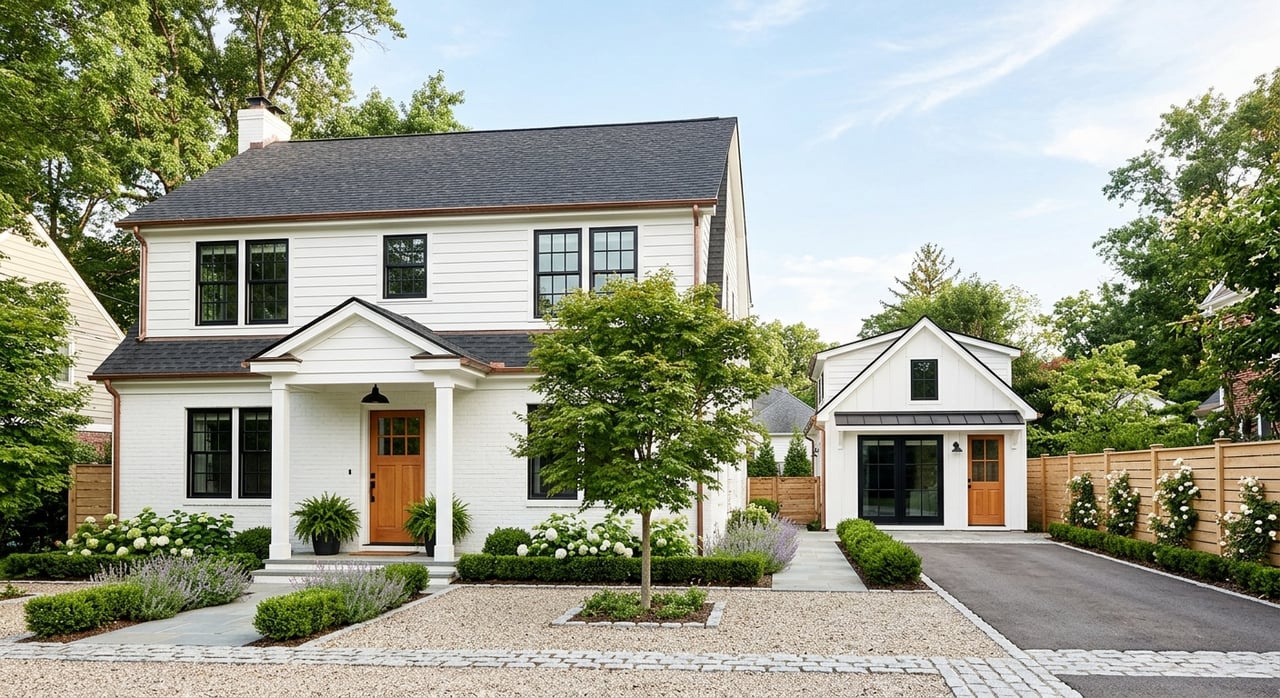
Wondering if there is a realistic way to buy in Decatur without taking on the full cost of the mortgage alone? In a market where home prices and monthly ownership costs run high, house hacking can be a practical path for buyers who want to live in the city and use rental income to help offset expenses. If you are curious about what house hacking looks like in Decatur, what property types fit the idea, and what rules you need to know, this guide will walk you through the basics. Let’s dive in.
What house hacking means in Decatur
House hacking usually means you live in one part of a property and rent out another part to help cover your housing costs. In Decatur, that often looks less like a casual roommate setup and more like a property with a separate legal unit or a small multifamily building.
That local difference matters. The City of Decatur has specific rules for accessory dwelling units, also called ADUs, and it also allows certain duplexes and small walk-up flats in several zoning districts. For many buyers, that opens up more than one path to making the numbers work.
Why buyers consider house hacking here
Decatur is a small, dense, and relatively expensive housing market. Census estimates put the median owner-occupied home value at $701,400, median monthly owner costs with a mortgage at $3,419, and median gross rent at $1,655. Redfin reported a median sale price of $705,000 in March 2026, with homes spending a median of 37 days on market.
Those numbers help explain the appeal. If you can live in one unit and rent another, the rental income may help reduce your monthly out-of-pocket housing cost. That can make ownership feel more manageable in a place where prices are high compared with many nearby areas.
Common Decatur house hack setups
Single-family home with ADU
One of the most relevant Decatur options is a single-family home with an accessory dwelling unit. The ADU might be a detached backyard unit or another code-compliant secondary dwelling on the lot, depending on the property and local standards.
This setup can work well if you want some privacy between your living space and your rental space. It also lines up with the city’s support for ADUs as part of neighborhood-scale housing.
Duplex with owner occupancy
A duplex can be one of the clearest house hacking models. You live in one unit and rent the other, which gives you separation, a more traditional landlord setup, and potentially simpler budgeting than renting out a room in your own home.
In Decatur, duplexes are allowed in R-85, R-60, R-50, and RS-17 zoning districts. That means the property type is possible in the city, but you still need to confirm that a specific home is legally established and compliant.
Three- to four-unit walk-up flat
If you want a more income-focused version of house hacking, a 3- to 4-unit walk-up flat may be worth exploring. In that model, you occupy one unit and rent the others.
Decatur allows walk-up flats with 3 to 4 units in several zoning districts, including R-85, R-60, R-50, RS-17, RM-18, RM-22, RM-43, and PO, with conditional use in I. This type of purchase is less common than a single-family home, but it can offer a stronger rent-offset strategy when it fits your goals and budget.
ADU rules to know before you buy
If an ADU is part of your plan, local rules are a big part of the decision. In Decatur, ADUs are allowed in R-50, R-60, R-85, RS-17, RM-18, RM-22, RM-43, and PO zoning districts.
The city also sets practical limits. Only one ADU is allowed per lot of record, the ADU must be between 300 and 800 square feet, and it can have no more than two bedrooms.
There is also an owner-occupancy requirement. The property owner must live in either the main home or the ADU for at least eight months each year. If you are hoping to buy a property and treat both units as fully tenant-occupied from day one, this is not the setup for that plan.
Zoning and site details still matter
Even when a property type is allowed in a certain district, that does not automatically mean every lot can support your idea. Zoning, setbacks, parking, and design standards can all affect whether an ADU can be added or whether a property’s current setup is compliant.
That is why the first question is not just, “Can I house hack in Decatur?” It is, “Can I house hack this specific property in the way I want?” A buyer who checks these details early can avoid expensive surprises later.
Financing basics for a house hack
Many buyers assume house hacking requires a special investor loan, but that is not always true. If you plan to live in the property as your primary residence, some owner-occupant loan programs may work for one- to four-unit homes.
HUD states that FHA 203(b) loans are available for one- to four-unit structures and can require as little as 3.5 percent down. Freddie Mac also offers mortgages for 2- to 4-unit owner-occupied primary residences, and Fannie Mae’s HomeReady options include 2- to 4-unit principal residences.
That does not mean every buyer or every property will qualify the same way. It does mean you should talk with a lender early, especially if you are comparing a single-family home with ADU potential against a duplex or a small multifamily property.
Budget beyond the down payment
Your down payment is only part of the picture. The Consumer Financial Protection Bureau says closing costs typically run about 2 to 5 percent of the purchase price, and it recommends keeping an emergency cushion of at least three to six months of expenses.
That advice is especially relevant for house hacking. Vacancy, maintenance, repairs, and tenant turnover can reduce the savings you expected from rental income, so a realistic budget matters just as much as a creative strategy.
A simple way to think about your budget is to include:
- Your down payment
- Closing costs
- Cash reserves
- Possible repair or setup costs
- Ongoing maintenance
- Property taxes and insurance
Long-term rental vs. short-term rental
Some buyers picture house hacking as listing part of the property for short stays. In Decatur, that is a separate path with different rules.
The city defines a short-term rental as a stay of fewer than 30 consecutive days. It also states that registration will be required in 2026, and in duplexes, walk-up flats, and stacked flats, no more than one dwelling unit per building may be used as a short-term rental at one time.
The city’s short-term rental rules also include registration, a permit fee, a local property manager, and other operating limits. So if your budget only works with Airbnb-style income, you will want to verify the current requirements before you make an offer.
Permits, taxes, and compliance
If you plan to build an ADU, convert space, or make major changes, permits are part of the process. Decatur requires building permits when a project constructs, enlarges, alters, repairs, moves, demolishes, or changes the occupancy of a structure.
Taxes matter too. The IRS says rental income is generally taxable, and when a home is used for both personal and rental purposes, expenses usually must be divided between those uses. The tax treatment can vary depending on how the space is rented, so it is smart to get tax guidance before you rely on projected income.
For property taxes, Decatur notes that all properties in the city are assessed by DeKalb County, and property value appeals go through the county. That is another carrying cost worth understanding early in your planning.
How to evaluate a Decatur house hack
A good house hack is not just about finding an extra unit. It is about finding the right fit between the property, your budget, and the local rules.
As you evaluate options in Decatur, focus on these questions:
- Is the property in a zoning district that allows your intended use?
- Is there already a legal second unit or multifamily configuration?
- If you want to add an ADU, does the lot appear likely to support it?
- Will you meet the owner-occupancy rule?
- Does the likely rent offset meaningfully improve your monthly budget?
- Have you accounted for permits, repairs, taxes, and reserves?
Why local guidance helps
House hacking can look simple on social media, but in Decatur the details matter. The best opportunities often come from understanding zoning, knowing which property types are realistic, and spotting where a home may have strong live-and-rent potential.
That is where local buyer guidance can make a big difference. When you have someone helping you sort through property type, neighborhood fit, and practical numbers at the same time, it is much easier to focus on options that truly match your goals.
If you are exploring a house hack in Decatur and want a grounded, local strategy, Roots Real Estate can help you search with the rules, numbers, and neighborhood context in mind.
FAQs
What is house hacking in Decatur, GA?
- House hacking in Decatur usually means living in one part of a property and renting another part, such as an ADU, one side of a duplex, or another unit in a small multifamily building, to help offset housing costs.
Are ADUs allowed in Decatur, GA?
- Yes. Decatur allows ADUs in R-50, R-60, R-85, RS-17, RM-18, RM-22, RM-43, and PO zoning districts, subject to rules like size limits, bedroom limits, and owner occupancy.
Can you buy a duplex and live in one unit in Decatur?
- Yes, duplexes are allowed in R-85, R-60, R-50, and RS-17 zoning districts, but you should confirm that the specific property is legally established and meets current city requirements.
Does Decatur require owner occupancy for an ADU property?
- Yes. The property owner must live in either the main dwelling or the ADU for at least eight months each year.
Can you use a short-term rental for house hacking in Decatur?
- Possibly, but short-term rentals follow a separate set of city rules, including registration requirements in 2026 and limits on how many units in certain building types can be used as short-term rentals.
What financing can work for a Decatur house hack?
- Depending on your qualifications and the property, owner-occupant options may include FHA 203(b) for one- to four-unit properties, along with certain Freddie Mac and Fannie Mae programs for 2- to 4-unit primary residences.
What extra costs should you budget for with house hacking?
- In addition to the down payment, plan for closing costs, cash reserves, maintenance, repairs, taxes, insurance, and possible vacancy or turnover costs.
Do you need permits to build or convert space for house hacking in Decatur?
- Yes, if the project constructs, enlarges, alters, repairs, moves, demolishes, or changes the occupancy of a structure, the City of Decatur says building permits are required.