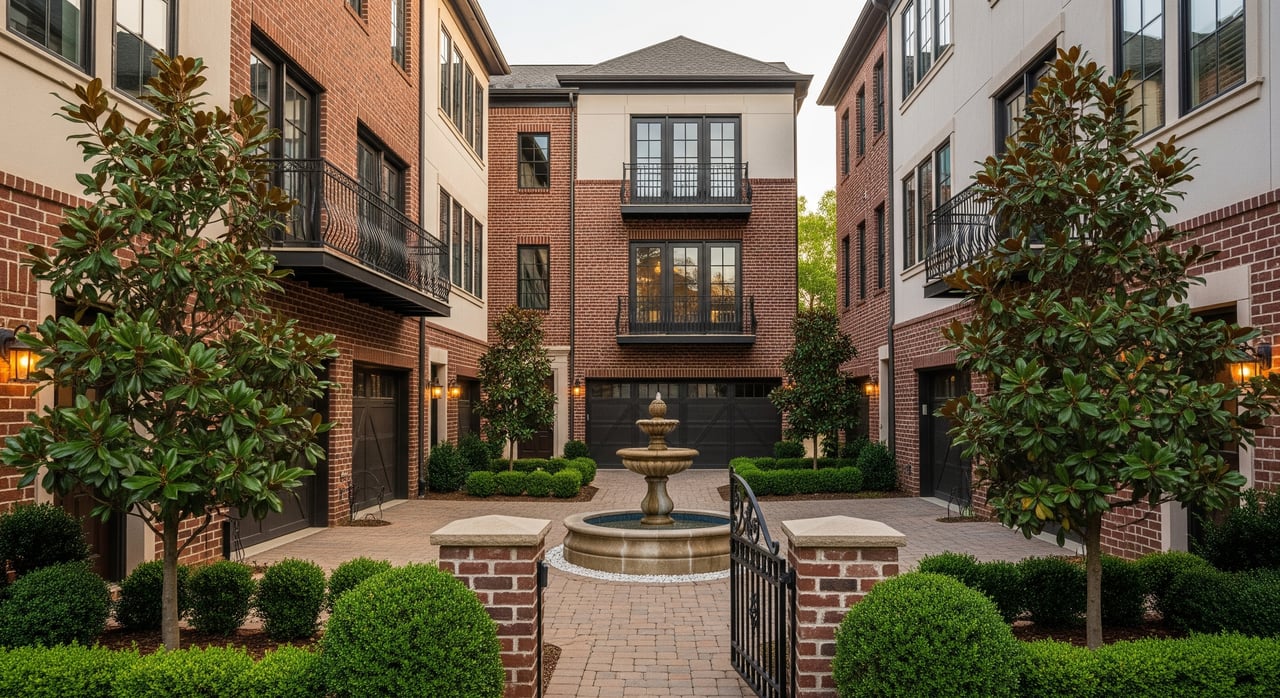
Are you eyeing a sleek Upper Westside townhome but unsure what the HOA fee really covers? You are not alone. In fast-growing Westside communities, HOA dues vary a lot by building type, amenities, and insurance. When you know what is included, you can budget with confidence, avoid surprises, and write stronger offers. This guide breaks down typical inclusions, how lenders view dues, the documents to request, and the red flags to watch for in Upper Westside. Let’s dive in.
What HOA fees usually cover
Townhome HOA coverage depends on the community’s legal structure. Some Upper Westside townhomes are part of a condominium regime, while others are fee-simple in a planned unit development. The governing documents control who maintains what. Always confirm which model applies before you rely on a budget line.
Exterior and structural maintenance
- Roof repairs, siding, painting, exterior trim, gutters, and shared building elements.
- This lowers your personal to-do list, but fees can rise if buildings age or large repairs are due.
Common grounds and amenities
- Landscaping, tree care, sidewalks, parking areas, drive lanes, lighting, and shared green space.
- Amenities like a clubhouse, pool, or fitness center add ongoing costs and future replacement needs.
Utilities and services
- Common-area electricity and irrigation are typical. Some townhome HOAs include water, sewer, trash, or basic cable and internet for individual units. This varies by community, so verify in writing.
Management and administration
- Professional management fees, bookkeeping, legal and accounting, tax prep, and reserves administration.
- Effective management helps with compliance and budgeting.
Master insurance policy
- HOA master insurance covers common elements and sometimes parts of the building’s exterior or interior, depending on the policy type.
- You still need your own policy for personal property and any interior items not covered by the master policy.
Reserves and long-term repairs
- Associations set aside money for predictable big-ticket items like roof replacement, repaving, and pool systems.
- Healthy reserve funding reduces the chance of special assessments.
Routine operations
- Ongoing maintenance such as minor repairs, pest control, pool care, lighting, gate and entry systems, and seasonal cleanup.
Compliance and enforcement
- Costs tied to regulatory compliance, collections, and legal action for delinquent accounts.
- High delinquency can pressure budgets for everyone else.
Master insurance vs your policy
Not all master policies are alike. Understanding the coverage helps you size your personal policy correctly and limit risk.
Common master policy types
- All-in or single entity. Often covers the building exterior and may include some interior components. Details vary by policy and community.
- Bare-walls or walls-out. Covers common elements and the exterior shell. Interior finishes and your belongings are your responsibility.
Always read the policy declarations to know if interiors, floor coverings, cabinets, or in-unit HVAC are covered. Then match your personal policy accordingly.
What you still need as an owner
- HO-6 or comparable coverage for personal belongings, interior improvements not covered by the master, personal liability, and loss-assessment coverage.
- Loss-assessment coverage can help if the association bills owners for a deductible or an uncovered loss.
Why it matters in Upper Westside
Atlanta’s humid subtropical climate brings heavy rains, strong summer storms, and occasional hail. Deductibles for wind or hail can be sizeable. Urban infill townhomes share walls and systems, which can raise shared-loss risk from events like water intrusion or fire. Confirm deductibles, covered perils, and how assessments would be handled.
How HOA fees affect your budget and loan
Treat HOA dues like any other recurring housing cost. Include them in your monthly budget and in your conversation with your lender.
Simple budgeting formula
Monthly housing cost = Mortgage principal and interest + Property taxes/12 + Homeowner’s insurance/12 + HOA dues + Utilities not covered by the HOA.
When comparing homes, look at the full monthly picture and any move-in or transfer fees. Do not forget to plan for special assessments or fee increases.
How lenders underwrite HOA dues
- Lenders count HOA dues in your monthly obligations for debt-to-income ratios.
- They usually verify dues through a statement or estoppel letter and may request the HOA budget and a certificate of insurance.
- Project type matters. Condo projects may face specific approvals for FHA, VA, or some conventional loans. Fee-simple townhomes in a PUD often have fewer project-level hurdles.
- Reserves and litigation count. Some investors flag projects with low reserves or open litigation. Large or frequent special assessments may need to be paid off or escrowed at closing.
Coordinate early with your lender. Provide the HOA name, ask how they classify the property, and confirm documentation requirements.
Documents to request before you commit
Ask for these items during your due diligence so you can verify what is covered, how healthy the budget is, and what rules apply.
- Governing documents: Declaration or CC&Rs, Bylaws, Articles of Incorporation, Rules and Regulations.
- Financials and budget: Current operating budget, most recent year-end actuals, and 2 to 3 years of financials. Request a delinquency summary.
- Reserve study: Most recent study plus notes on funding decisions.
- Insurance and claims: Certificate of insurance with limits, covered perils, and deductibles. Ask about any major recent claims.
- Management and vendor contracts: Management agreement and major service contracts such as landscaping, pool, security, or roofing.
- Legal and litigation: Any pending or threatened lawsuits and settlement details.
- Meeting minutes and assessments: Last 12 to 24 months of board minutes and a record of recent or planned special assessments.
- Owner rules: Rental caps, short-term rental rules, pet policies, and architectural change procedures.
- Estoppel or payoff letter: Confirms dues, due date, and any amounts owed for the specific unit.
Red flags that deserve a closer look
- Reserves are low or the reserve study recommends higher funding than the current plan.
- Frequent or large special assessments in recent years.
- High owner delinquency. Ask for the rate and trend.
- Active litigation, especially matters tied to construction defects or insurance coverage.
- Rising management or legal fees without a clear explanation.
- Deferred maintenance for major items like roofs or paving.
- Developer still in control with delayed homeowner turnover.
- Confusing expense split between a master association and a sub-association.
- Rules that conflict with your goals, such as strict rental limits.
- Large deductibles that could be billed to owners as loss assessments.
Upper Westside context to keep in mind
Upper Westside has seen a surge of urban infill townhome development. Many communities start under developer control, then transition to homeowner boards. This timing can affect budgets, reserve funding, and how quickly promised amenities are delivered.
Amenities like rooftop decks, small green spaces, and gated entries are common. These features look great in listing photos, but they add operating and replacement costs that feed into dues. Urban townhomes often share parking areas and private drives, so maintenance of paving, gates, and lighting shows up in the budget.
Atlanta’s climate puts ongoing pressure on roofs, gutters, drain lines, and pest control. In parts of Westside, drainage and stormwater management can matter. Ask if the HOA has responsibility for stormwater systems and whether any repairs or insurance claims have taken place.
Multi-tier associations are not unusual. Your townhome may sit within a smaller HOA and a larger master association. Each can charge separate fees and carry different responsibilities. Verify both layers before you compare dues across listings.
Steps to take before you offer
Before you write an offer
- Ask the listing agent for the current HOA fee and a breakdown of what it includes.
- Request an estoppel letter or instructions to obtain one through management.
- Confirm whether the property is a condominium project or a PUD townhome for financing. Share this with your lender early.
- Ask for basic governing documents and the most recent budget if available.
During due diligence
- Include a specific HOA document review contingency with enough time to receive a full packet.
- Condition your approval on there being no undisclosed special assessments or material litigation.
- If reserves are thin or major work is planned, consider negotiating a seller credit.
Before closing
- Obtain a final estoppel and confirm no changes since contract.
- Verify any transfer fees, move-in rules, and certificate requirements.
Guidance for sellers
- Provide HOA documents up front to build buyer confidence and reduce delays.
- Disclose any pending assessments and share recent meeting minutes to avoid surprises and renegotiations.
How to compare HOA fees the smart way
Do not compare dues across the Upper Westside on price alone. Focus on apples-to-apples. Match by age, amenity level, and insurance structure. A community that includes water and exterior insurance will have different dues than a fee-simple townhome that covers only common-area landscaping. Look at reserve health, upcoming projects, and deductible levels. The most affordable option on paper is not always the lowest total cost to own.
Negotiation ideas if issues pop up
- Ask for a price reduction or seller credit to offset a known upcoming assessment.
- Require the seller to contribute toward planned work or fund reserves at closing.
- If your financing program flags the community’s reserves, litigation, or delinquency rates, be ready to walk if the risk is too high.
Ready for clear guidance in Upper Westside?
If you want a clean, confident path to a townhome you love, we can help you review documents, coordinate with your lender, and compare communities the right way. Connect with the local team that pairs neighborhood insight with patient, step-by-step guidance. Reach out to Roots Real Estate to get answers tailored to your goals.
FAQs
What do Upper Westside townhome HOA fees usually include?
- Expect some mix of exterior maintenance, common-area utilities and landscaping, master insurance for shared elements, management, reserves, and amenities, depending on the community’s structure.
How do HOA dues affect my mortgage approval?
- Lenders count dues in your monthly debt-to-income ratio and may require HOA documents, budgets, insurance certificates, and confirmation of any special assessments.
What is the difference between condo townhomes and PUD townhomes?
- Condo projects often require specific project approvals and may cover more of the building envelope, while fee-simple PUD townhomes are financed more like single-family homes with the HOA covering shared areas.
What insurance do I need if the HOA has a master policy?
- You still need an HO-6 or equivalent for personal property, interior improvements not covered by the master policy, personal liability, and loss-assessment coverage.
Which HOA documents should I review before removing contingencies?
- Ask for CC&Rs, bylaws, rules, recent budgets and financials, reserve study, insurance certificate, meeting minutes, litigation status, contracts, and an estoppel letter.
What are common red flags in HOA financials and minutes?
- Thin reserves, frequent special assessments, high delinquencies, active litigation, deferred maintenance, rising legal costs, and confusing master-sub association expense splits.